
The Hand That Rules the World
Mothers: The Most Influential Force in History

The Museletter - by Endless Days of Summer
EDITORIAL NOTE
The Museletter 🌿 is here, a newsletter for the curious, nostalgic, and lovers of beauty!
Today, the premium article arrives earlier in honour of Mother’s Day, we reflect on the influence of mothers—not only in the private sphere of family, but in the deeper formation of character, and how these early influences can extend far beyond the individual, shaping leaders, and in turn, the broader fate of civilizations.
This week, the premium article is free for 24 hours and email subscribers. It might be one of the last freely available in-depth articles. The weekend edition will return soon instead, and free as always.
A special thank you to my lovely premium subscribers. You are the best! It is because of your support that we are able to share daily beauty on our notes, and dedicate more time in bringing stories like the one today. Your help makes such a huge difference, and I am deeply grateful to have you by my side.
If you enjoy this article, please like, comment, subscribe, and share with someone who might enjoy it. And if you feel you want to go further, please consider becoming a Premium Member or part of The Summer Circle to have access to so much more.
Let beauty find you again..
Endless Days of Summer 🌿
The Hand That Rules the World
Mothers: The Most Influential Force in History
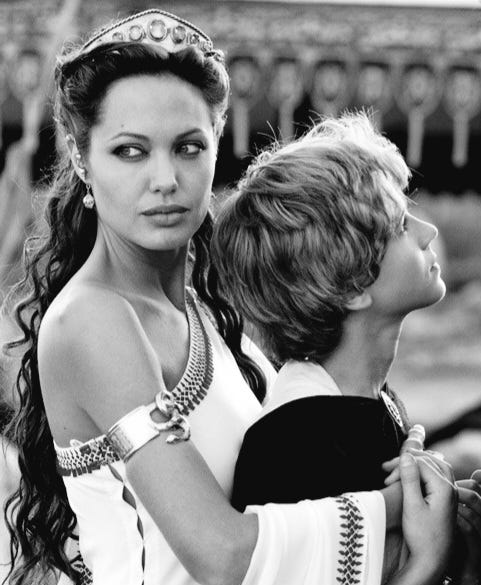
“The hand that rocks the cradle is the hand that rules the world.”
—William Ross Wallace (1865)
🌿
Civilizations often imagine power incorrectly.
They picture it seated on thrones, standing behind podiums, commanding armies, moving markets. History trains the eye upward, toward crowns and institutions, toward the visible machinery of authority.
But power begins much earlier than that.
Long before a man governs a kingdom or nation, he is governed by a voice. Before he speaks to crowds, he has already learned what love sounds like, what approval feels like, whether the world is safe, whether tenderness is weakness, whether silence means peace or fear.
The first ruler of humanity is not political. It is maternal.
This is why the longer one thinks about the old line—the hand that rocks the cradle is the hand that rules the world—feels less like a poetic sentiment and more like a forgotten strategy, a hidden principle that history keeps overlooking.
Empires are not only built in parliaments or on battlefields. They are built in childhood. In gestures so small they escape historical record entirely: a hand placed on the forehead during illness, a look of disappointment, a tone of reassurance, or the presence or absence of warmth.
The world is shaped first emotionally, and only later politically.
This is perhaps why maternal influence remains so misunderstood. It is difficult to measure, impossible to quantify, and almost invisible, hidden by the spectacle of public power. History remembers conquerors because conquest leaves ruins and monuments behind. But emotional formation leaves no visible architecture. It disappears into personality, into instinct, into the private corners of human behavior where history rarely looks.
And yet, what is a civilization except the outward expression of inward conditions?
Every society eventually becomes a psychological reflection of its childhood. Its politics mirror its fears. Its culture mirrors its desires. Its leaders often embody unresolved emotional appetites that began long before ideology entered the picture. Entire nations can begin to hunger for domination, security, validation, or destruction not only because of economics or policy, but because people carry the same invisible wounds into adulthood.
The cradle comes before the throne.
And this is the unsettling implication hidden inside the phrase. A mother does not merely raise the child; she shapes the emotional vocabulary through which the child will later interpret the world. Before ideology, there is environment. Before belief, there is feeling. A child first learns existence not intellectually, but emotionally.
Whether love must be earned.
Whether vulnerability is dangerous.
Whether courage must be embodied.
Whether authority is cruel.
These lessons are absorbed long before they are understood.
And because they are absorbed so early, they feel natural and become permanent. People spend entire lives believing they are responding to current reality when, in fact, they are responding to emotional patterns established before their memory fully formed.
This is where the ripple begins. What was intimate and private becomes historical and civilizational.
In the scale of world events, a mother calming a frightened child may seem insignificant. Yet from such moments emerge future citizens, future lovers, future leaders, future tyrants. And the emotional atmosphere surrounding a child can echo decades into the future, surfacing later as confidence, cruelty, restraint, paranoia, tenderness, or ambition.
The ancient world understood this more clearly than the modern one does. Many civilizations treated motherhood with an almost sacred reverence, not just because mothers gave life, but because they shaped the moral and emotional continuity of society itself. To influence the child was, in many ways, to influence the future structure of the world.
Maternal influence is immense. It can birth legends or monsters.
Alexander the Great was shaped by his mother Olympias, who instilled in him an unshakeable belief in his divine destiny. He was said to descend from Achilles through his mother, and from Heracles through his father. More importantly, she convinced him he was the son of Zeus himself. This would become the fire behind his conquest of the known world—the fulfilled destiny of a boy who had once dreamed of being Achilles himself.
By contrast, Nero was molded from the cradle by his ruthless mother Agrippina. Through relentless manipulation and political scheming, including marrying Emperor Claudius and likely poisoning him, she seized the throne for her son. She kept him under tight control, constantly watching and criticizing his every move. Suetonius describes her as “over-watchful and over-critical”, dominating his life and eliminating anyone who tried to come between them. This suffocating environment, built on fear and manipulation rather than love, helped forge the boy into one of history’s most paranoid and cruel tyrants.
History is full of leaders who once trembled at a parent’s silence, who stood in doorways, listening for footsteps in the hall, anxiously awaiting or fearing a parent's voice. The most powerful figures in history carried private emotional inheritances into public life. The emperor, the revolutionary, the philosopher, the president, all once looked to someone for comfort, approval, protection, or love.
No throne can erase the cradle.
Modern culture, however, recognizes only visible power. It values what can be displayed publicly: status, influence, dominance, achievement. And because maternal power operates privately, it is frequently underestimated. But hidden power is still power. Sometimes it is the deepest kind.
And perhaps this is why societies become endangered when they begin to mock women, when they degrade, or trivialize the future mothers altogether. Because a civilization that loses respect for the feminine in its formation stages eventually becomes obsessed only with performance. It begins admiring outcomes while neglecting origins. It wants strong leaders, stable societies, and emotionally healthy citizens while dismissing the very environments that make such people possible.
For human beings do not emerge from nowhere. Every civilization is, in part, the emotional aftermath of its homes.
This does not mean mothers are singularly responsible for every success or failure of humanity. Human beings are more complex than that. But it does mean that the earliest emotional forces exert extraordinary influence over what later unfolds in public life.
The hand that rocks the cradle does not merely soothe the child. It is the hand that rules the world.
🌿
🌿🌿🌿
This is why The Museletter exists…
To seek out beauty where it is real, good and true, and to uncover the depth that makes it matter.
Not everything beautiful is meaningful.
But everything meaningful carries a form of beauty.
🌿🌿🌿
🌿
Until Next Time
Thank you so much for reading and subscribing to The Museletter 🌿. If you enjoyed this please like, share, comment, and subscribe. And if you feel you want to go further, please become part of The Premium Membership or The Summer Circle so we can bring you more moments like this.
To my lovely premium subscribers, your support helps us keep exploring, creating, and bringing these stories to life. I am deeply grateful that you are a part of my world.
While the world scrolls, we wander..🌿
Endless Days of Summer 🌿
NEWS ✨️
The Art of a Lady 🌸🍃 - A new publication
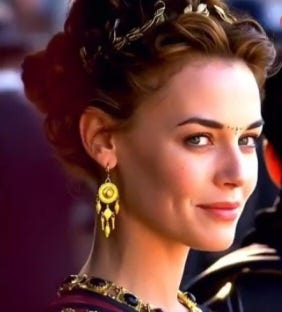
Grace and character are in the small details. The gestures we make, the attention we pay, the moments we notice—or overlook. The Art of a Lady 🌸🍃 is about those moments: how to live with grace, character, and attention to the subtleties that shape our lives.
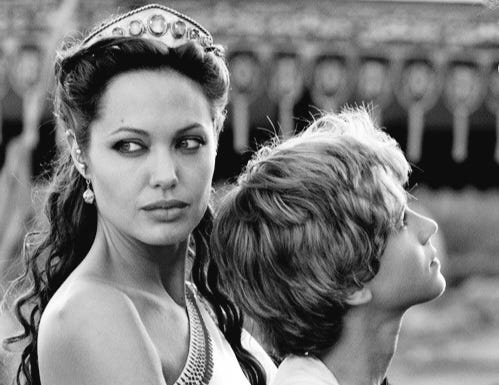
And the original cradle is the womb… my wife and I did the best we could to both rock the cradle…🤔
And now our daughter is beginning studies to become a birthing Doula…🕯️