
An Invincible Summer
A quote and reflection to guide you

The Museletter - by Endless Days of Summer
EDITORIAL NOTE
Welcome to this week’s weekly reflection of The Museletter 🌿, a newsletter for the dreamers, wanderers, and those who quietly observe.
The beginning of the week can feel very heavy. These quotes are meant to make you pause, breathe, and inspire—even if for just a moment. Something thoughtful to carry with you as the week unfolds.
This week, the weekly quote and reflection is free for every subscriber because this one rings true to what this account and publication is all about :) ☀️
A special thank you to our lovely premium subscribers, it is because of your support that we are able to share daily beauty on our notes, and dedicate more time to it. Your help makes a huge difference, and I am deeply grateful to have you by my side.
If you enjoy this quote, please like, comment, share a. And if you feel you want to go further, please consider becoming a Premium Member 🌿 so we can bring more moments like this. it with someone who dreams in the same direction. And if you are not yet part of The Inner Circle 🌿, consider upgrading to have access to much more.
I hope you enjoy it.
Endless Days of Summer 🌿
An Invincible Summer
A quote and reflection to guide you

“In the depth of winter, I finally learned that within me there lay an invincible summer.”
— Albert Camus
The French writer Albert Camus once wrote these profound words. At first glance, they appear simple, paradoxical, yet they contain a profound revelation about the human condition.
Camus does not speak of spring arriving, nor of winter ending. He speaks of the depth of winter, when the world is dark and cold, and it seems to fold inward upon itself. A time when nature withdraws its abundance and reveals its bones.
Yet Camus does not see despair there. He discovers something hidden, something invisible when the days are warm and easy. The discovery he describes does not come from the world becoming kinder. It comes from looking inward and finding something there that the cold could not touch.
Here, winter is not merely a season of cold and darkness. It is the moment in life when things grow silent, plans falter, and certainties dissolve. The moment when circumstances refuse to cooperate with hope, expectations collapse, and the reassuring narrative we tell ourselves about life fractures under pressure.
The warmth we once relied on—success, approval, companionship, momentum—withdraws suddenly, leaving us alone with ourselves. It is only when the landscape becomes barren, and the world becomes simpler, almost severe. The deeper terrain of the self becomes visible.
And it is in that stark clarity, in that painful stillness, we discover something unexpected: an “invincible summer.”
The remarkable thing about this quote is that the summer he discovers is not fragile. It is not described as delicate or temporary. It is invincible. He boldly proclaims something that cannot be conquered. Not because it denies winter, but because it is independent of it.
This inner summer is not naïve optimism often celebrated in modern life, nor is it the belief that hardship will disappear tomorrow. It is something more unshakable. A clarity. A deep knowing. An ability to see beyond circumstance—even when it becomes difficult. Camus, after all, was a thinker deeply aware of the absurdity and harshness of existence.
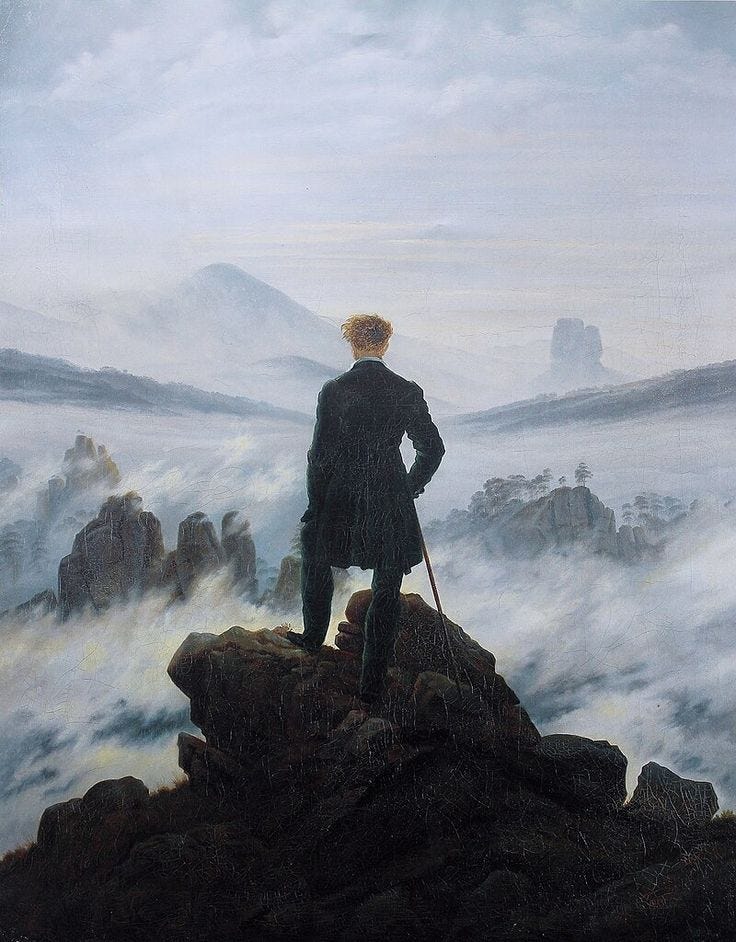
When he speaks of summer, it is not because he ignores the “cold”—it is because he has conquered it. The summer Camus describes is a blazing sun waiting to be discovered—a capacity of the spirit that is not dead but dormant.
From this, a deeper implication emerges: Camus implies that resistance is possible inside all of us. A person may feel broken by circumstance, yet beneath the fracture there is strength, there is character, and there is the ability to perceive beauty even when life does not offer it.
Some people discover it in solitude. Others in loss, in failure, in long periods when life refuses to unfold according to their hopes. At first these experiences appear purely destructive. They take things away: illusions, expectations, comfortable narratives about how life should proceed. Yet in doing so, they create space. And in that space, a different form of strength begins to appear.
It may start as something small. The ability to appreciate a quiet morning. The impulse to create, even without recognition. Gestures that may seem modest from the outside, but they reveal something profound: the human spirit possesses a warmth that does not depend on the climate around it.
This is the summer Camus speaks of. The part of us that remains capable of wonder, even after disappointment. The part that refuses to surrender its dignity, even when the world becomes cold or chaotic. It is the flame that continues to burn steadily enough to illuminate our own path.
And perhaps that is why the discovery happens in the depth of winter. When difficulty strips away illusions. Once someone has discovered that flame, the seasons begin to look different. It is what Camus describes as the moment you choose to break through and reclaim something within you that refuses to be defeated.
Winter will still arrive. Loss, disappointment, and uncertainty will remain inevitable companions of human life. But once someone has discovered that inner sun, winter loses its power over the soul. It becomes a season rather than a verdict. The cold may surround us, but it cannot reach the center where summer lives, because the deepest source of warmth was never outside us to begin with.
There is no life without darkness. But it's only when a season of darkness arrives, when the light is scarce and the world is stripped of warmth that we ask the question: what remains within me?
Sometimes it takes the longest winter to realize it. But once it is found, it remains as written by Camus:
An invincible summer.
NEWS ✨️
The Art of a Lady 🌸🍃 - A new publication

Grace and character are in the small details. The gestures we make, the attention we pay, the moments we notice—or overlook. The Art of a Lady 🌸🍃 is about those moments: how to live with grace, character, and attention to the subtleties that shape our lives.
Here you’ll find:
Gentle reflections on effortless elegance and timeless grace
Practical recommendations on culture, conduct, and personal presence
Occasional deeper essays on composure, character, and timeless refinement
How It Relates to The Museletter 🌿
While my main newsletter The Museletter 🌿 explores beauty, art, philosophy, history, and travel, The Art of a Lady focuses on the everyday practice of elegance and grace with character. It complements the main newsletter with smaller, practical reflections, and sometimes longer essays that encourage pause, thought, and a sense of refinement in daily life.
The bundle deal 🌿🌸
All annual and group subscriptions to The Museletter 🌿 will receive the new publication The Art of a Lady🌸🍃 for FREE.
—2 newsletters for the price of 1, until March 31st.
All current annual premium subscribers of The Museletter 🌿 will get it too.
Who is this for?
This publication is for everyone, not just for women; it offers a lens on grace, elegance and conduct, while exploring insights that are universal. It is clear, thoughtful, and reflective—but meant to be lived and noticed in everyday life in a practical way.
If this speaks to you, I would be delighted to welcome you as a founding reader, to share these reflections and make elegance part of your daily life. 🌸🍃
Until Next Time
Thank you so much for reading and subscribing to The Museletter 🌿. If you enjoyed this please like, share, comment, and subscribe. And if you feel you want to go further, please become a Premium Member 🌿 so we can bring more moments like this.
To my lovely premium subscribers, your support helps us keep exploring, creating, and bringing these stories to life. I am deeply grateful that you are a part of my world.
I’m so glad you’re here with me..
Endless Days of Summer 🌿
Beautifully written as always! 🙂
Wonderful newsletter Summer with much to deeply ponder. I like Camus very much and this quote resonates with me. I’ve gone through a very dark time. I liken it to being in a pitch black cave, but sometimes being in the darkness, or in Camus’s case the darkness of winter, is when revelations come. In my case eventually I could see the pitch black cave had an opening. I could see the outside sun. Bit by bit with struggle I moved closer and closer to the cave’s opening and the sun outside it. At this point I am right near the opening and can feel the sun warming me. I’m not standing in the sunshine just yet but I’m close. I’ve learned through this difficult, dark experience that sometimes it takes the dark experiences in life to change us and make us more receptive to a different kind of path than we had been on before. It also helps in a new appreciation of the sun’s warmth at the end of it all.